A Post-Covid Reflection
It is hard to believe it was only six years ago that we embarked on our spring holiday only to discover that a highly contagious, mysterious disease was rapidly spreading throughout the globe. We said goodbye thinking we would see each other in a week and did not return to campus until the following August. When we did return, class sizes were kept intentionally small to mitigate the spread of this unknown new disease. The fear and anxiety of that time was overwhelming and pervasive, and our children were not exempt from that stress. Families faced difficult decisions, and for those families who chose to return to school, our courageous guides and our small classrooms sustained the physical and social-emotional well-being of our children as we weathered the storm together.
During that time, social isolation was a major concern, and it was widely agreed that children who attended school benefited immensely from both peer and teacher relationships. Six years later, we have become accustomed to these small class sizes which came to seem standard, yet which previously were the exception rather than the norm. Though they served their purpose during a challenging and unprecedented time, they limited the social and academic experiences of our students. We are happy to see our classrooms restored to their previous sizes and brimming with opportunity for our learners.
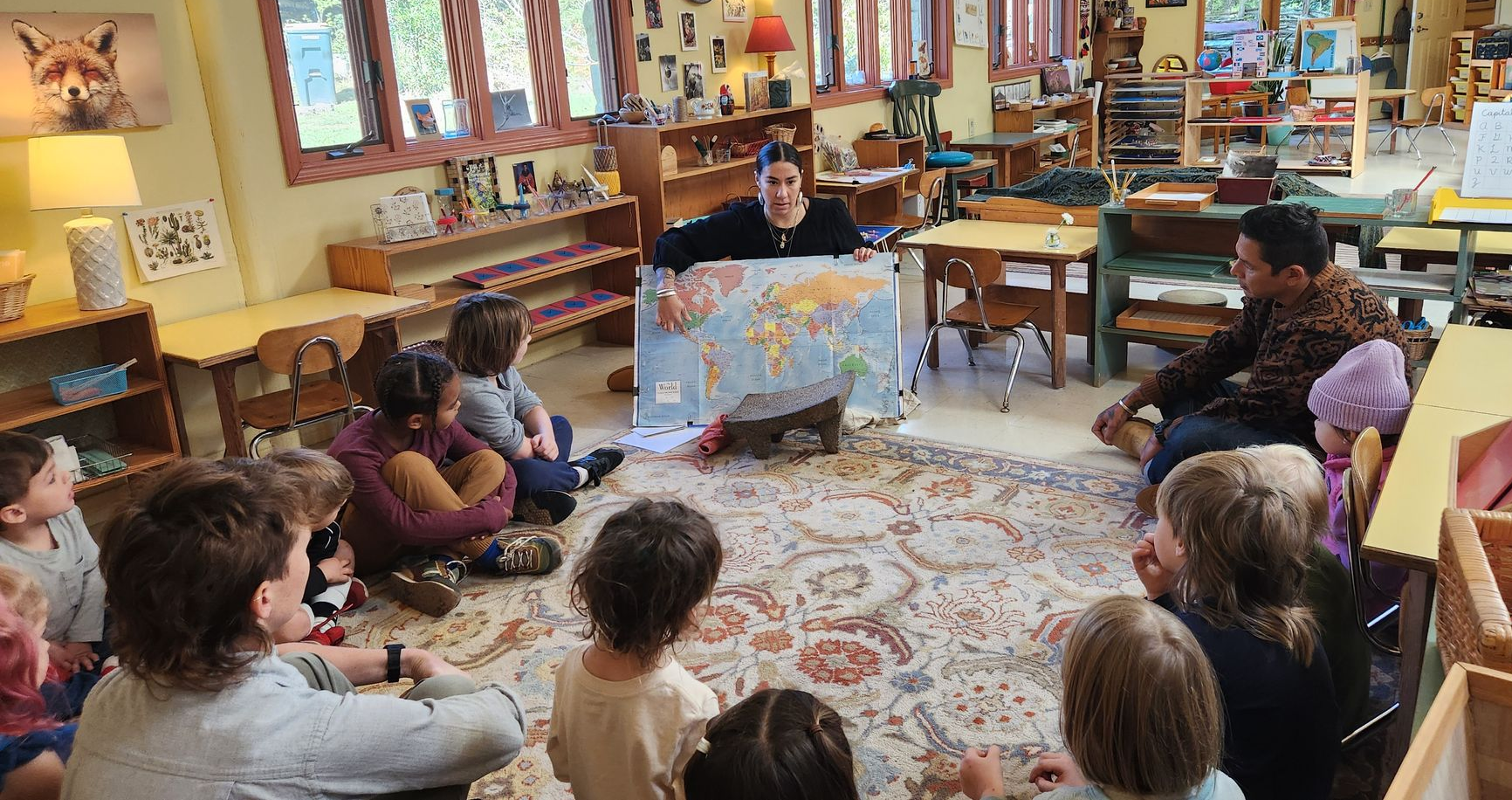
There are many unique facets of the Montessori philosophy, but one of the hallmarks is the benefit of a larger class size. Unlike in a traditional education setting where a large class size means children are left behind, in a Montessori environment learning flows in all directions, and it is this multiplicity and wealth of experience that fosters opportunities for an expansive education where everyone thrives. More children in the classroom translates to diversity of personalities, skill levels, experiences, and backgrounds. Throughout the three-year-cycle, learning forms more of a spiral than a line, and older students’ proficiency grows as they guide their younger peers. The environment sparks collaboration rather than competition and teachers allow room for error, self-reflection and maturation.
Aside from the academic and learning opportunities a larger student population offers, it also provides a significantly more diverse social experience. The variety of temperaments, communication styles, and interests mean there is someone for everyone. Children learn to navigate social intricacies with kindness and resilience. The larger ecosystem fosters peaceful conflict resolution, empathy, kindness and cooperation. The diversity of the classroom allows space for everyone to find their people and feel the beautiful gift of friendship. As always, our work is to create an environment that enriches each child’s experience and cultivates responsible leaders, independent problem solvers and self-actualized learners.